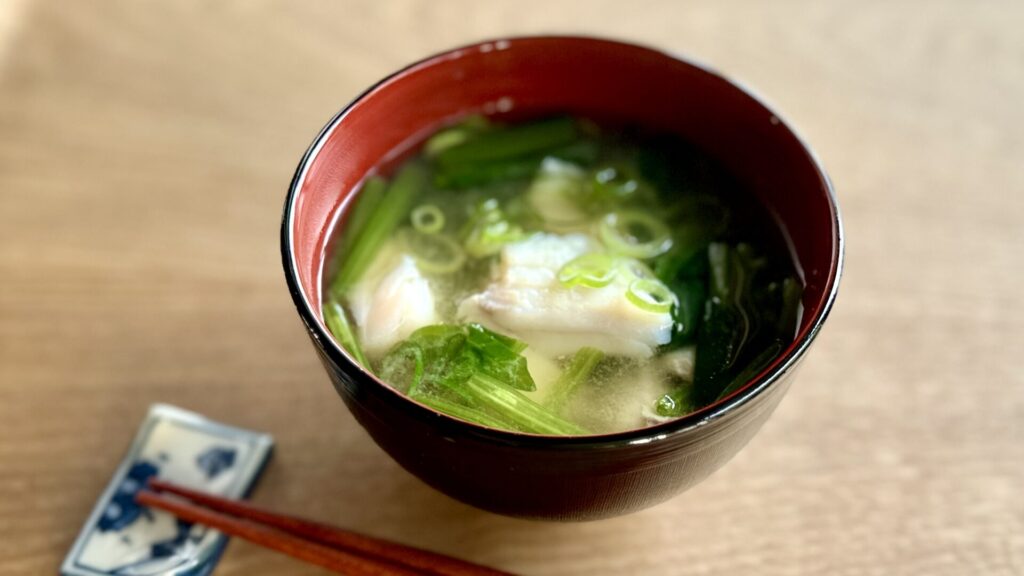
Today’s miso soup features cod and spinach. Cod, known for its mild-flavored white meat that is easy to eat for many people worldwide, is just right for everyday miso soup too. By salting the fish and removing the moisture that rises to the surface before cooking, the unwanted fishy smell can be eliminated, leaving only the pleasant cod flavor in the soup. The only thing to be cautious of is that the residue of the salt may cause the soup to become too salty. Add a smaller amount of miso paste than usual initially, and gradually add more as needed to avoid making it too salty. Spinach, or any leafy green vegetables, can provide extra nutrition to the dish, resulting in a perfectly tasty and healthy miso soup that complements any meal. I hope you give it a try!
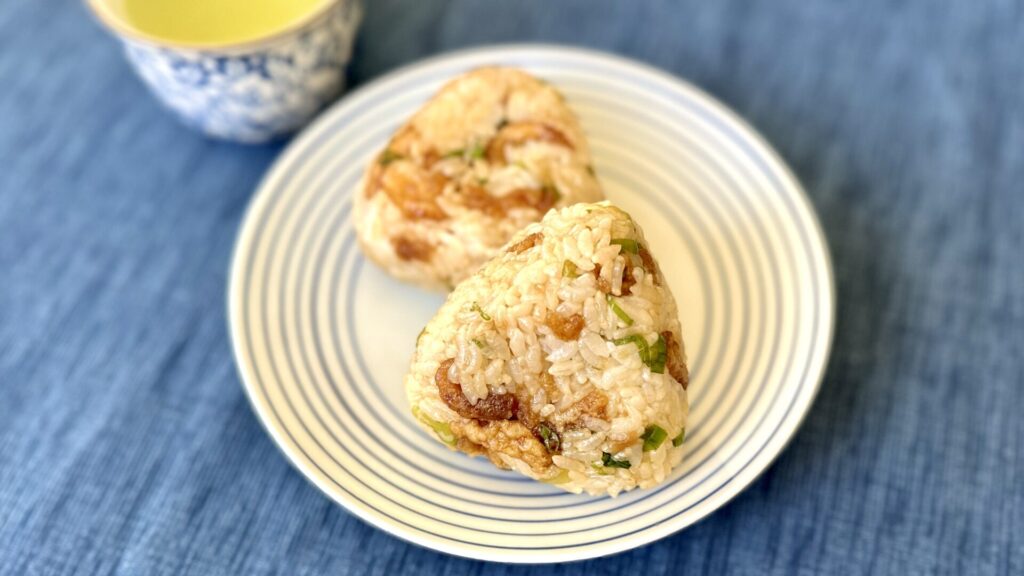
Onigiri with Fried Onions is a simple treat made with store-bought fried onions seasoned with a soy sauce mixture (or Mentsuyu), mixed in rice, and shaped into triangular onigiri. Many of you may already have fried onions in your pantry from holiday use, making this a great way to recycle the ingredient. When the fried onions are flavored in the sauce, they taste almost like tempura (yum!). And, of course, they pair perfectly with steamed rice. This dish makes for an easy lunch to bring to work or a tasty after-school snack. It’s seasoned enough, but feel free to add a little salt to taste. Enjoy it as naked onigiri or wrap it with nori roasted seaweed. If you’re feeling lazy, you can simply enjoy the mixed rice as is. Hope you like it!
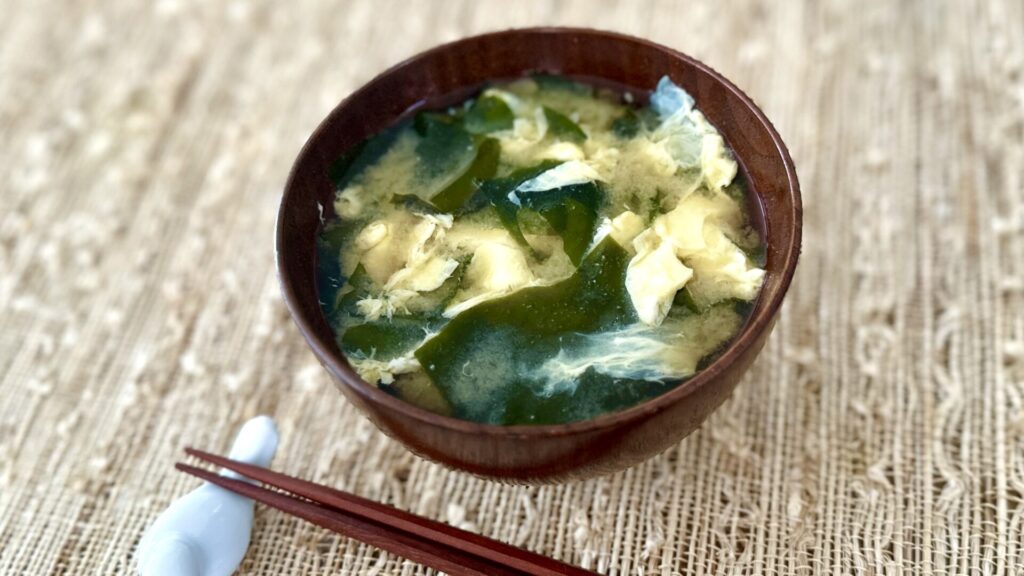
Today’s miso soup features Wakame seaweed and eggs. This may be our easiest and quickest miso soup yet. Wakame doesn’t need to be rehydrated; it can be added directly to the Dashi, and it will soften in the soup. Eggs add good protein and substance to this miso soup, and they’ll be cooked in no time. This is a perfect miso soup for breakfast or a busy weeknight dinner. Hope you give it a try!
Crispy Shokupan Crusts are fried bread crusts coated with sugar. They are not the healthiest, but they’re a cheap and delicious homemade snack. Many of us make sandwiches at home and cut off the crusts from the bread and throw them away. Next time you make sandwiches, save those crusts! Simply deep-fry the bread until nice and crispy, coat with sugar, and that is it. If you want flavor twists, add some cinnamon or Kinako (soybean flour) to the sugar. To avoid the bread becoming greasy, deep-fry at a higher temperature. But be careful not to burn it at the same time. Fry the crusts, stirring constantly until they’re nicely browned and light. Eat them while still warm; they are absolutely delightful! Hope you give it a try!
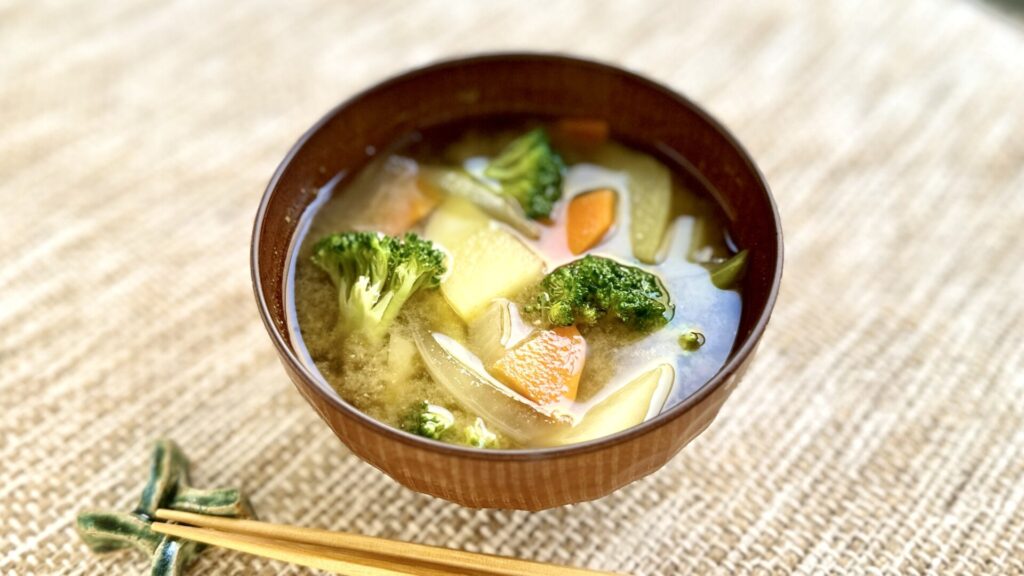
Today’s miso soup is made with vegetable broth. You can clean out any leftover vegetables from your fridge, cooking them in convenient store-bought broth. Then, season with the miso paste of your choice to create an easy-to-make, tasty miso soup for any time of day. Even without dashi, this miso soup offers plenty of umami flavor and a touch of natural sweetness from the vegetables and broth. The only thing you need to be careful about is adjusting the amount of miso paste depending on the type of vegetable broth you use. Many store-bought broths contain sodium, so add the miso paste gradually to avoid it becoming too salty. Other than that, this healthy miso soup is great because it’s not only delicious but also incredibly nourishing. Plus, all the ingredients can be found locally without a trip to the Japanese market. Vegetarian and vegan-friendly too. I hope you give this a try!
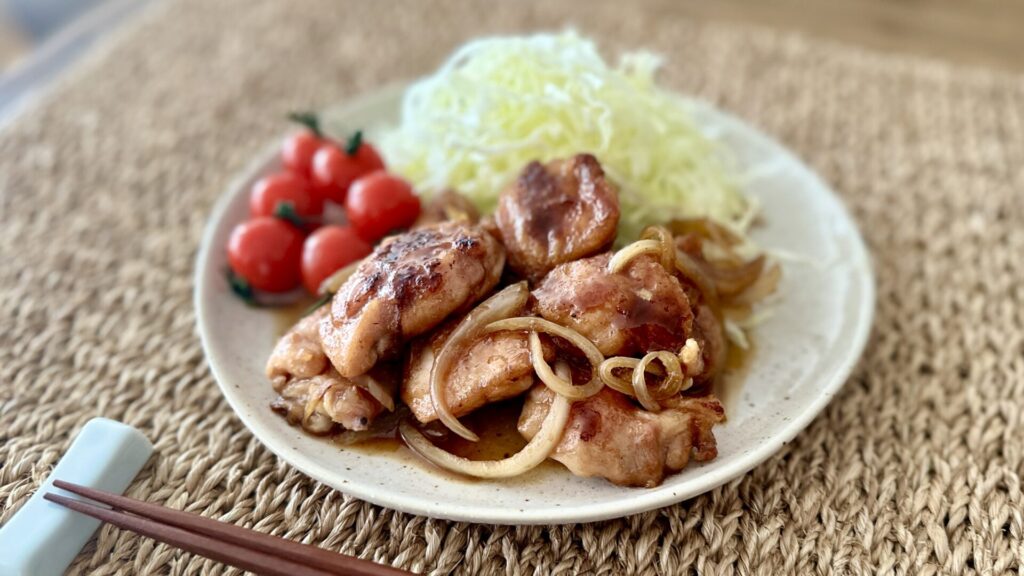
Chicken Shogayaki (鶏の生姜焼き) or ginger chicken is sautéed chicken and onion in a ginger-soy flavored sauce. Just like Ginger Pork and Ginger Beef, this is a popular meat entree for everyday dinner in Japan. The taste of spicy ginger and lightly sweet savory sauce perfectly complements steamed rice. Along with some miso soup (find your favorite from many miso soups in our library!), you have a nutritious and delightful meal. The dish can be done in a matter of 10-15 minutes, so it’s easily made after work or school on busy weekdays. The typical and best side vegetable for Ginger Chicken is shredded cabbage, which adds a refreshing crunch to the meal, but a green salad would do too if that’s easier. If you don’t know what to cook, this is it! Hope you give it a try!
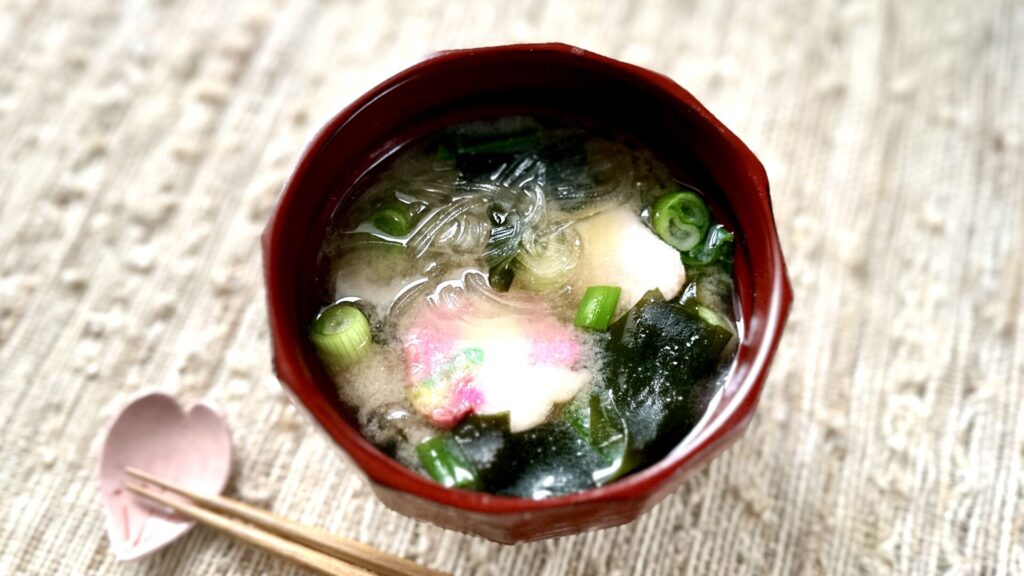
Today’s miso soup features Harusame glass noodles. Harusame (春雨) are smooth and glutenous noodles made from potato starch. Harusame is typically sold as hard, dried white sticks, but once cooked, they becomes soft and clear noodles. Harusame literally means “spring rain” in Japanese, which is quite poetic. Harusame is often used in Nabe hot pot dishes or salad in Japanese cuisine, but it’s also great in miso soup. As long as it’s not a large amount added to the soup (as it will absorb liquid), there’s no need to rehydrate it beforehand. We also added Fu (麩), glutenous wheat bread, which tastes like soft croutons in the soup but acts more like a garnish here. Flower-shaped Fu, as used in the recipe, adds a splash of color, perfect for springtime. We hope you give it a try!
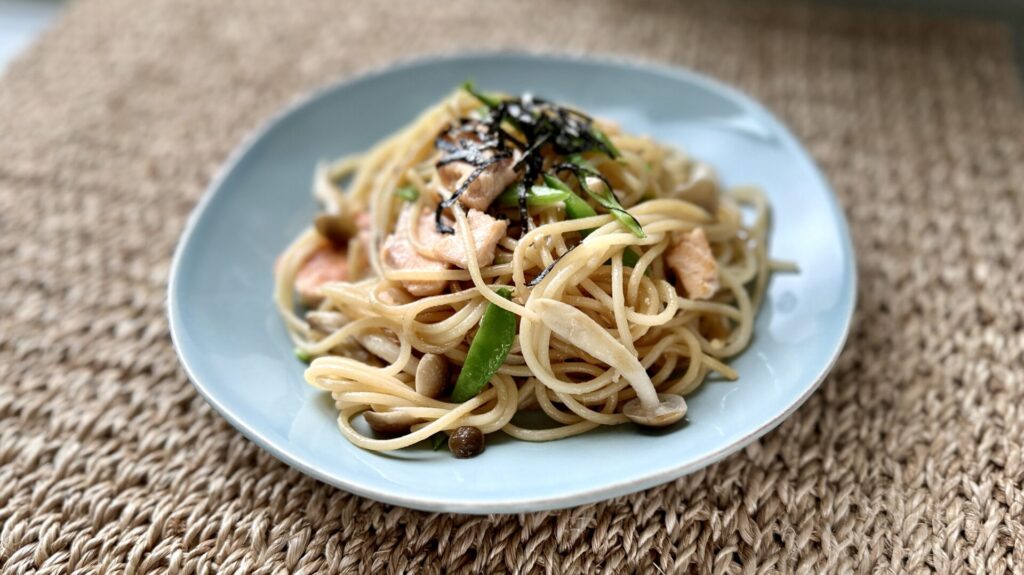
Salmon and Shimeji mushroom spaghetti is a pasta dish flavored with Japanese seasonings. People in Japan love Italian spaghetti and other pasta dishes, but for everyday meals, they often make pasta in a Japanese style like this. While boiling water and cooking spaghetti, prepare all the ingredients and start cooking salmon and vegetables. That way, it’ll be done fast. If you like a little more punch to the taste, cook with garlic and/or squeeze lemon juice before eating. Hope you like it!
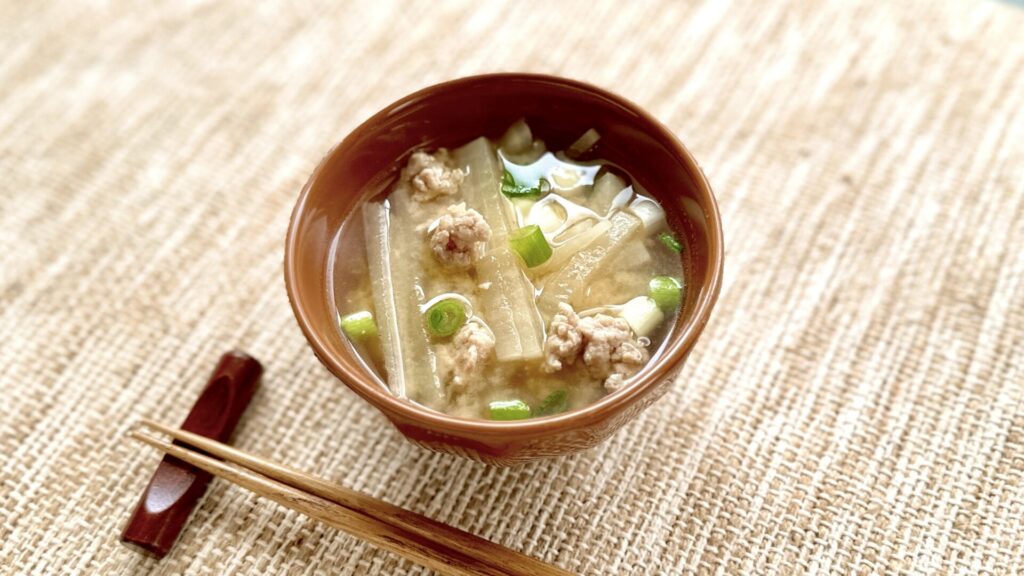
Today’s miso soup is made with ground chicken and Daikon radish. Because ground chicken imparts a rich savory chicken flavor, we skipped the Dashi and used just water. Daikon is a versatile vegetable to have in the pantry; it can be used in miso soup, salads, and can keep well for at least a couple of weeks in the fridge if wrapped properly. It’s crunchy when raw but becomes tender and melts in your mouth when cooked for a long time. You can enjoy different textures depending on how long you cook it. Nowadays, many US markets sell daikon radish, so the ingredients for this miso soup can be easily sourced locally. Like many of our miso soups, miso soup with ground chicken and Daikon is easy to make, healthy, and delicious! We hope you give it a try!
Chocolate truffles (トリュフチョコレート)are a French confection and are very popular in Japan too, especially around Valentine’s Day, which is deeply connected with the custom of giving chocolate gifts. Many people there create homemade concoctions in their own kitchens. Chocolate truffles usually consist of a soft filling (ganache) and a coating of chocolate (couverture) around the filling. It’s very easy to make if you’re not tempering chocolate to coat the ganache. Our recipe simply involves rolling the ganache into balls and coating them with cocoa powder, without any intricate skills needed. Mix two ingredients and chill them long enough, and most of your job is done! If you want to flavor them with some liqueur, go ahead. We used Grand Marnier, but rum or bourbon will work well too. If the chocolate feels too soft when you’re handling it, chill it in the fridge at any point, and that should help. Try making these easy but delicious Chocolate Truffles for your Valentine this year!