
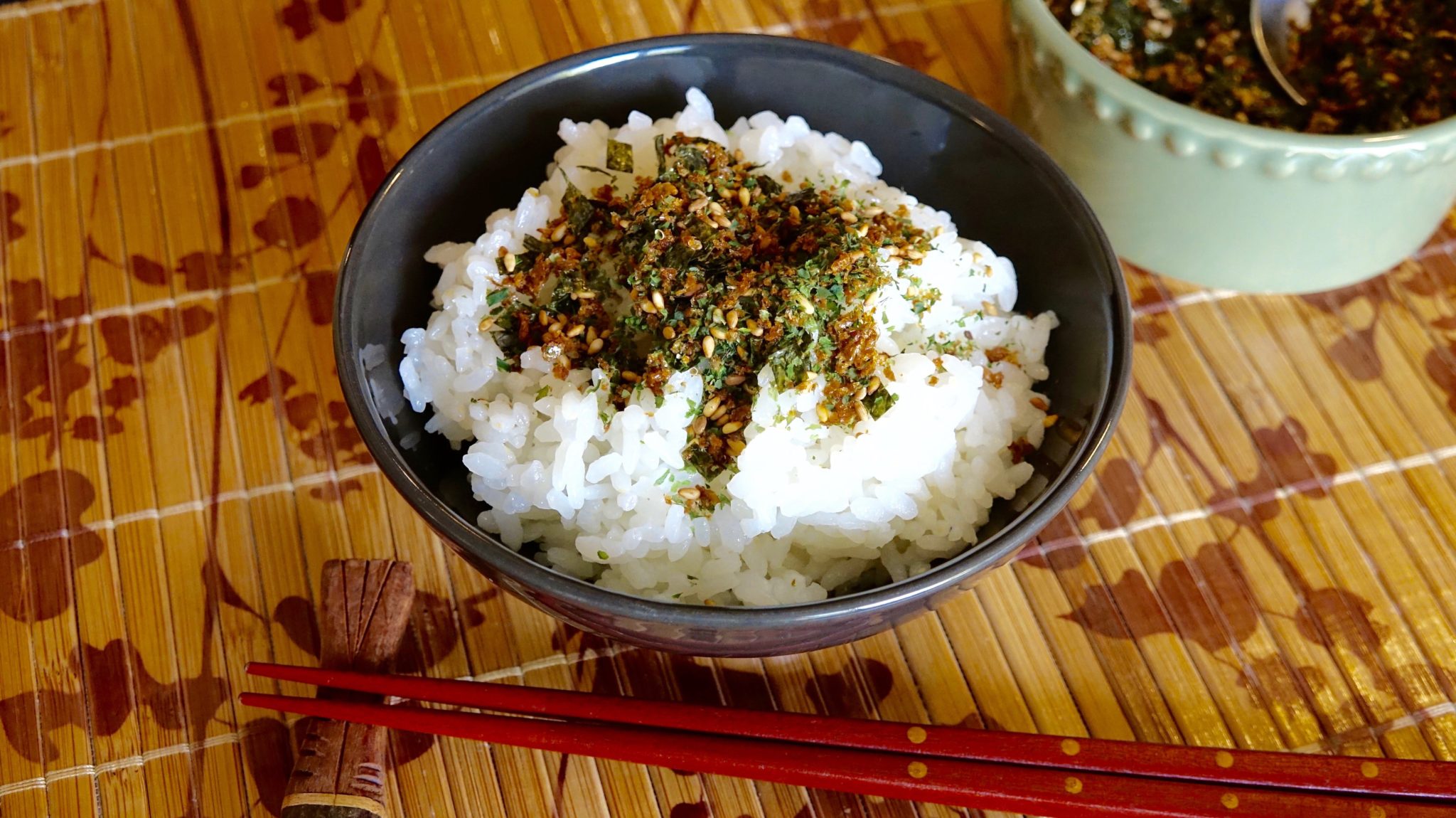
Furikake is a popular Japanese rice seasoning made from dried seafood, seaweed, and flavorful seasonings. While it’s commonly sold as a prepackaged item in Japan, homemade Furikake is easy to make, delicious, and free from preservatives or artificial ingredients.
In this post, we’ll show you how to make a simple, all-natural Furikake recipe using nori (dried seaweed) and katsuobushi (bonito flakes). It’s perfect for sprinkling over steamed rice, rice balls (onigiri), or even noodles and salads.
What is Furikake?
The word Furikake (ふりかけ) literally means “to sprinkle” in Japanese. As the name suggests, it’s typically sprinkled over steamed rice or onigiri (rice balls). Occasionally, it can also be used as a topping for noodles or salads. Unlike other types of rice toppings like tsukudani or nametake, which are wet, Furikake is dry and has a flaky or powdery texture—so they shouldn’t be mixed.
Furikake’s main purpose is to season rice. While it’s rarely eaten as a main dish by itself, it can serve as a simple accompaniment when you’re short on time or don’t have much of an appetite. In fact, many picky-eating children in Japan who refuse other foods will still eat rice with Furikake. While it doesn’t offer significant nutritional value, it’s definitely better than skipping a meal.
When and How to Use It
Traditionally, Furikake is used to top hot rice or onigiri (rice balls), but that’s just the beginning. It also works well on:
- Fried Potato
- Poke or Sashimi
- Chicken Wings
- Cold noodle dishes
Furikake is also a great way to add a pop of color to rice in bento (Japanese lunch boxes). When the other dishes in a bento don’t have much color, using Furikake—especially varieties with pink, yellow, or green ingredients—can brighten things up.
Making Furikake at Home
If you visit a Japanese supermarket, you’ll find a wide variety of convenient Furikake products. Popular flavors include egg, tarako (cod roe), salmon, sesame, and salt, among many others. Because it’s dried, highly seasoned, and often contains preservatives, store-bought Furikake has a long shelf life.
As mothers, we often rely on these convenient, store-bought versions when preparing bento lunches for our kids. But if you prefer to serve all-natural food, homemade Furikake is the way to go. It contains no artificial ingredients, tastes just as good as the packaged kind, and is very inexpensive to make! Once prepared, it can be stored in an airtight container or bag in the fridge and enjoyed for up to a month.
Give it a try—you might find yourself making it again and again!
Short Video
More Furikake Recipes
- Noritama Furikake Recipe – made with egg and Nori roasted seaweed.
- Katsuo and Kombu Furikake Recipe (Kinshobai style) – a hybrid of typical dry Furikake and more wet Tsukudani.
Video
Ingredients
- 1/2 cup Katsuobushi (10g)
- 2 tsp Soy Sauce
- 2 tsp sugar
- 1 Tbsp sesame seeds (toasted)
- 1 Tbsp Nori (roasted seaweed, cut into small pieces)
- 1 Tbsp Aonori (green seaweed powder)
Instructions
- Put the Katsuobushi, crushing by hand, in a non-stick pan along with Soy Sauce and sugar. Cook at low heat about 5-6 minutes, stirring constantly and taking care not to burn. Katsuo may seize or clump but keep cooking and break apart as much as possible. Let cool on a vat completely, and crush into small pieces.
- Cut Nori into small pieces with kitchen scissors. Mix seasoned Katsuobushi, toasted sesame seeds, cut Nori, and Aonori together.

This recipe was originally published in March 2018. The post was updated on September 10, 2025 with more useful content, new photos and a short video.


1 Comment
Oooh I’ll have to try out this recipe!
I’ve been making my own furikake for a few years, with toasted sesame seeds and nori, but I’ve been feeling like I needed something new and different recently 🙂