
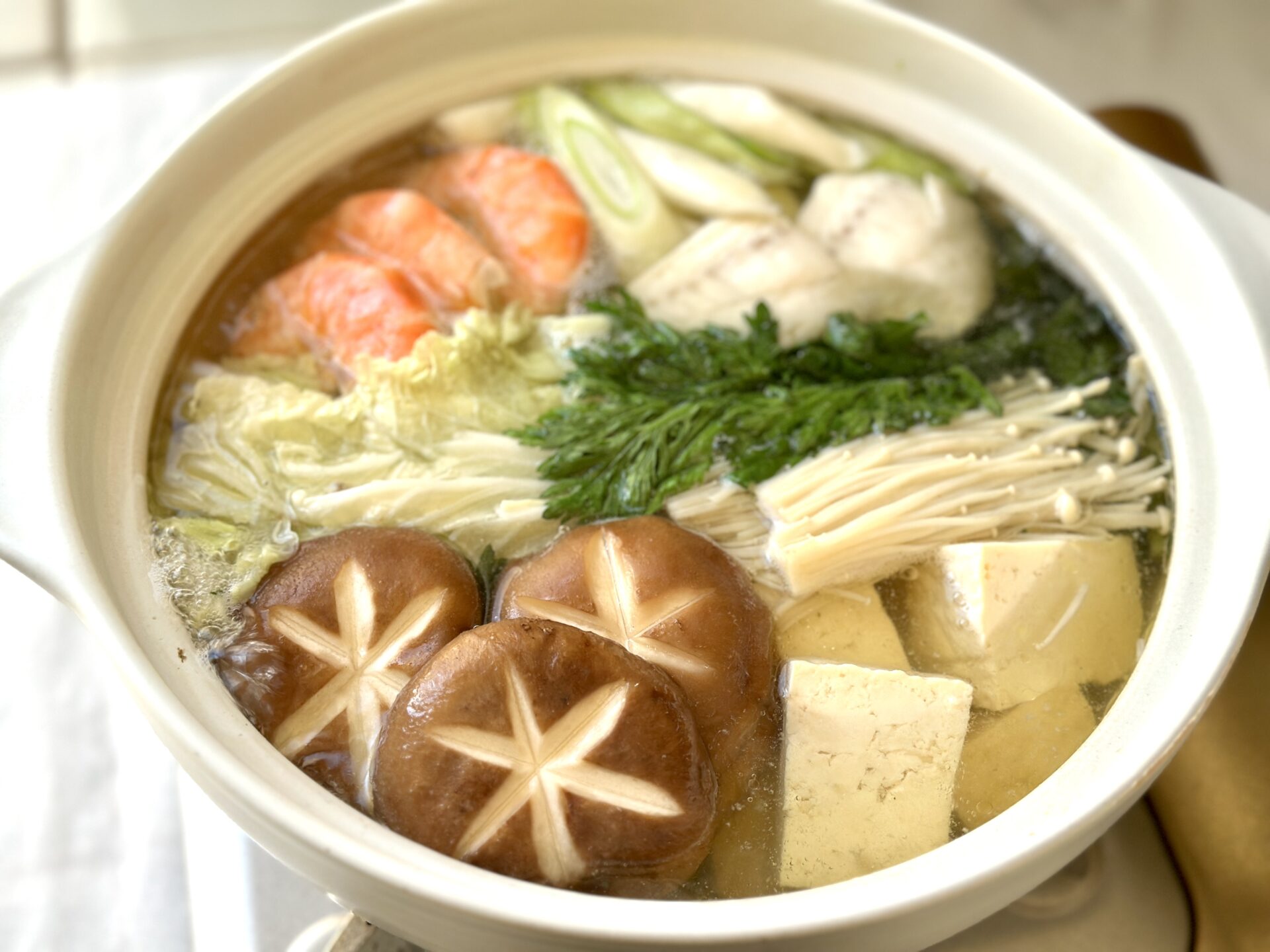
Mizutaki (水炊き) is a traditional Japanese hot pot dish (known as nabemono, or simply nabe) in which fish or other meats and a variety of vegetables are gently cooked in a lightly flavored—or often unseasoned—broth. The cooked ingredients are then dipped in tangy ponzu sauce just before eating. Mizutaki is typically prepared in a ceramic pot called a donabe, right at the dining table over a portable gas stove. Part of the enjoyment comes from cooking and eating together as the meal progresses. While it may seem somewhat similar to sukiyaki, mizutaki is lighter and more delicate in flavor—making it an especially comforting and perfect dish for cold weather.
What’s Mizutaki?
Mizutaki literally means “water cooking,” but despite its simple name, it is packed with ingredients and rich, satisfying flavors. Mizutaki starts with a base of Dashi broth, to which a variety of proteins and vegetables are added and gently cooked. It is especially popular during the winter months in Japan. Not only is it served piping hot, but the seasonal fish and vegetables used in mizutaki are at their peak of flavor during this time of year.
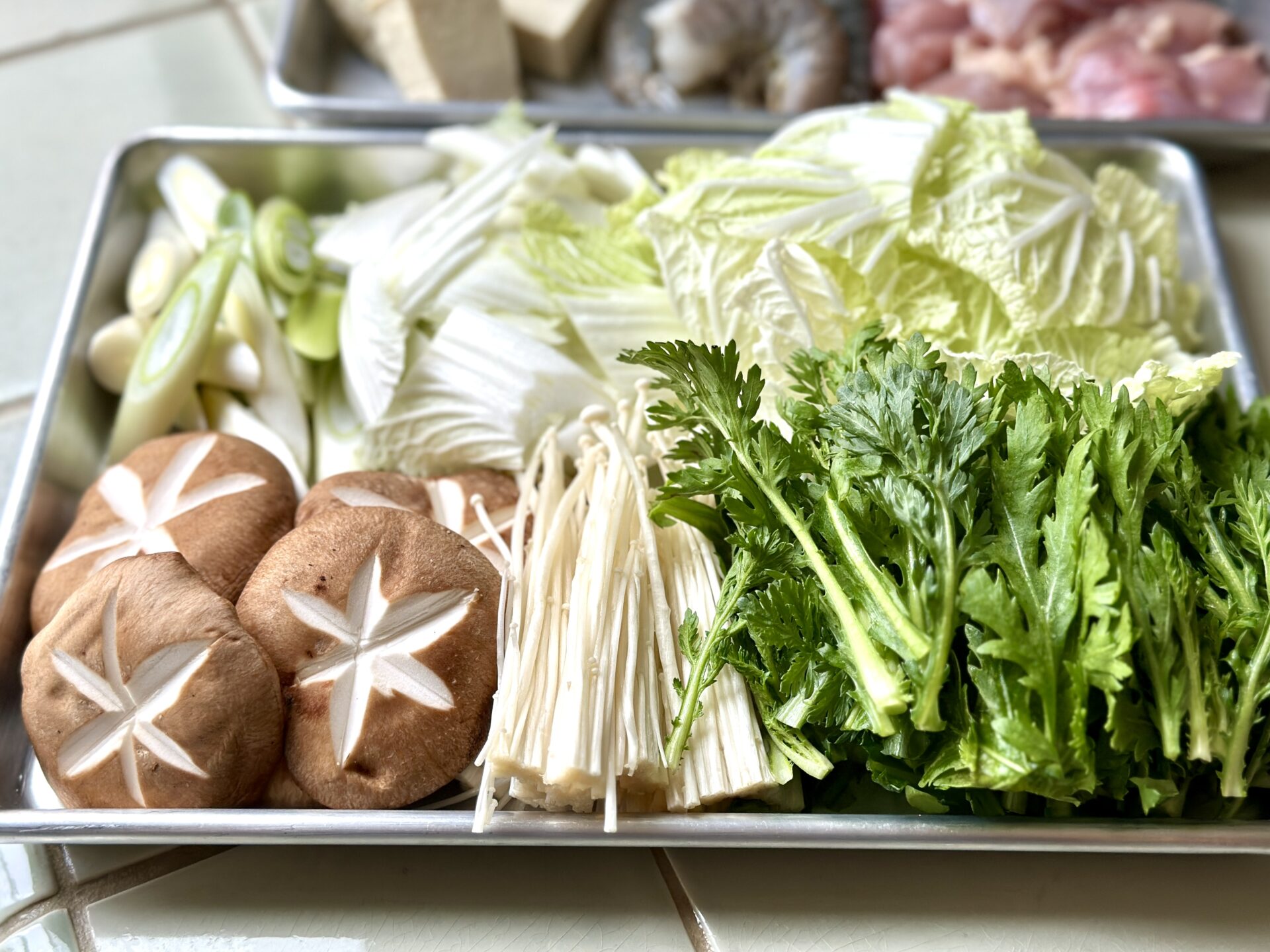
Although we can buy most vegetables year-round today, the main vegetables traditionally used for Mizutaki—such as napa cabbage, kikuna or shungiku (chrysanthemum greens), and shiitake mushrooms—are winter vegetables that offer their fullest taste and texture in the colder months. Seasonal fish is also at its fattiest, with rich flavor and natural oils. For Mizutaki, mild white fish such as cod or other white fish is commonly used. That said, you can also add other proteins like chicken or thinly sliced pork, depending on your preference.
There are a few ingredients that are considered essential for a classic mizutaki:
- Napa cabbage – Tender cabbage with crinkled leaves that soften beautifully in the broth.
- Naganegi (Japanese long onions) – Long onions that are mostly white, thicker than green onions but thinner than leeks.
- Kikuna or shungiku – Edible chrysanthemum greens with a distinctive, slightly herbal flavor.
- Shiitake and enoki mushrooms – Shiitake adds depth and umami, while enoki mushrooms are long, thin, and mild in flavor. Both are commonly used in Japanese hot pot dishes.
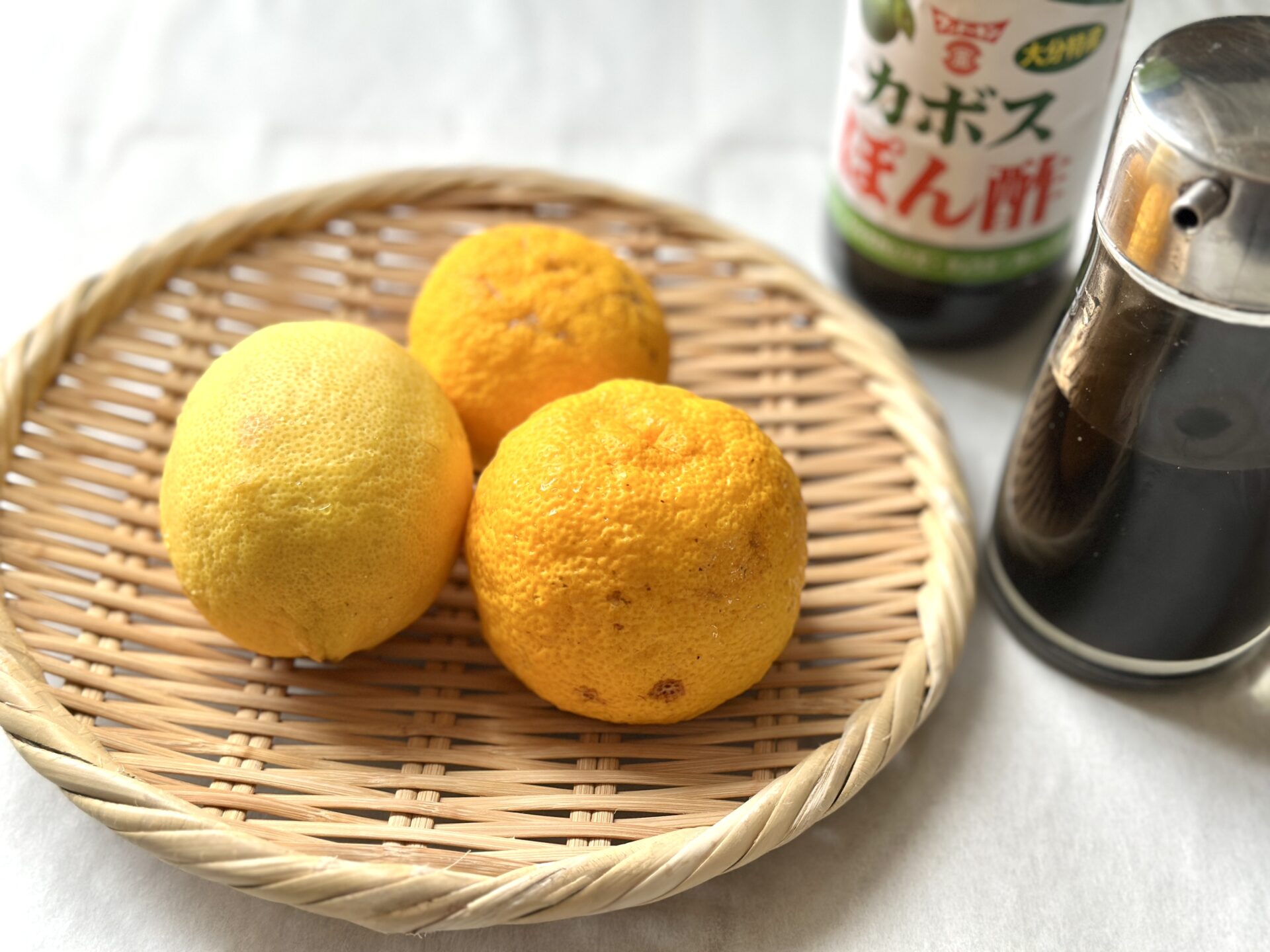
The broth for Mizutaki is usually left unseasoned, though some people lightly season it with soy sauce or sake. Instead, the cooked ingredients are enjoyed by dipping them into Ponzu sauce, a citrus-based soy sauce. You can customize the Ponzu by adding grated daikon radish, chopped green onions, or a sprinkle of Shichimi Togarashi if you like a little heat. Mizutaki is packed with vegetables and is considered a very healthy meal—there’s no need to feel guilty even if you end up eating a little too much.
Mizutaki is wonderful to make at home, but it is also so popular that many people enjoy it at restaurants. In December, Japan enters the peak season for Nabe hot pot. Companies and groups of friends gather for year-end parties, often heading to restaurants after work to enjoy Mizutaki along with plenty of drinks. By the time they head home, they’re warmed through and through. December is truly the season of hot pots—and lively celebrations—in Japan.
After all the ingredients have been eaten, there’s no need to waste the most flavorful part of Mizutaki: the soup. Steamed rice is added to the remaining broth to make Zosui, a risotto-like dish. Seasoned lightly with soy sauce and sake, it brings the meal to a comforting and satisfying end.
Tips and substitutions for Mizutaki
Mizutaki is highly customizable, so feel free to choose your favorite vegetables and proteins. Even if you can’t find traditional Japanese winter vegetables, you can still enjoy the flavor and spirit of Mizutaki.
- One of the most common fish used for Mizutaki is cod, but other mild white fish work well, too. Oily fish such as salmon or mackerel are generally not recommended, as their strong flavor and aroma can become overpowering when cooked with other ingredients..
- Chicken is another excellent option for Mizutaki, adding extra protein and enriching the flavor of the broth. Ground chicken meatballs are a great addition if you have time to make them, and thinly sliced pork works just as well.
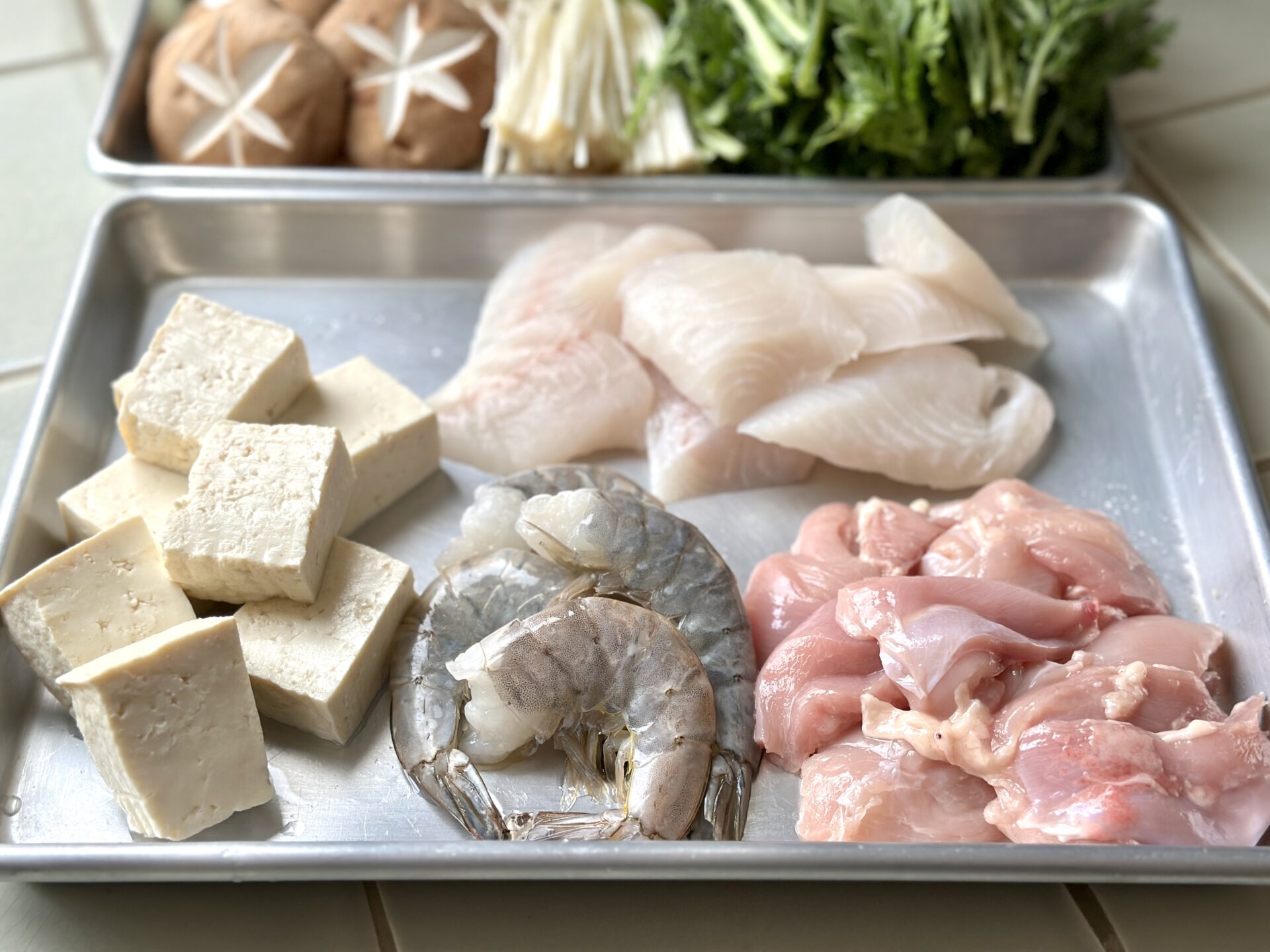
- While napa cabbage and shiitake mushrooms are often easy to find at local grocery stores these days, other Japanese vegetables may be harder to come by. Feel free to improvise with what’s available—thinly sliced carrots, spinach, or even regular cabbage all make good substitutes.
- If you’d like to add some carbohydrates to your Mizutaki, udon noodles or mochi rice cakes are wonderful options. They’re hearty, satisfying, and soak up the flavorful broth beautifully.
More recipes like Mizutaki
Video
Ingredients
- 4-5 cups Dashi
- 4 white fish filets (cut into 2″-3″)
- 4 chicken thighs (cut into 4 pieces)
- 8 shrimps
- 1/2 Nappa cabbage (cut 2″ width)
- 2 Naganegi (long onions, cut diagonally)
- 1 bunch Kikuna (cut 2″ long)
- 1 package tofu (cut 1″ width)
- 8 shiitake mushrooms
- 1 package enoki mushrooms
Ponzu sauce
- 1/2 cup soy sauce
- 1/4 cup rice vinegar
- 1/4 cup citrus juice (such as lemon or Yuzu)
Instructions
- For Ponzu sauce, mix all the ingredients.
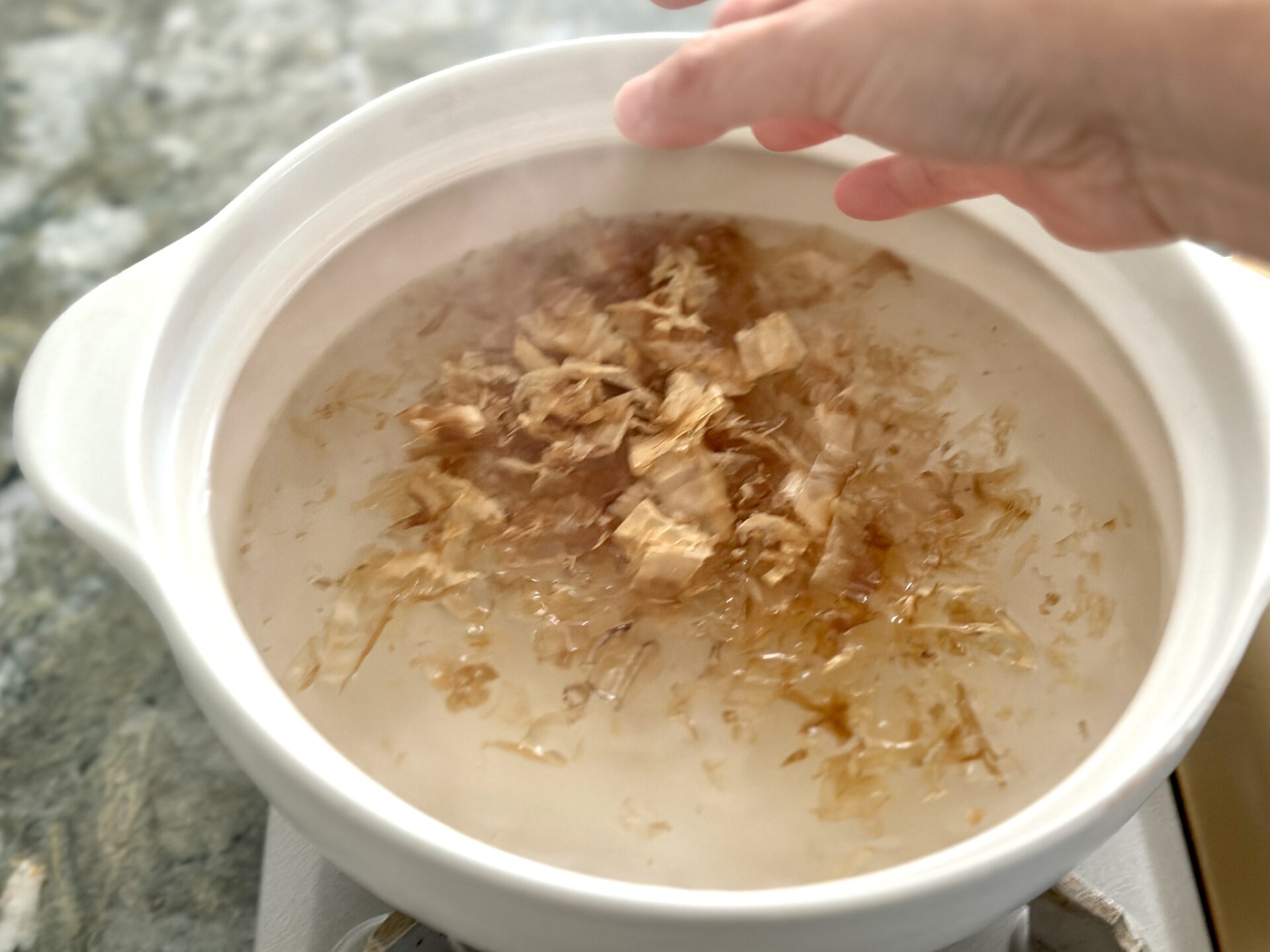
- Boil Dashi 2/3 of a pot and keep medium heat.
- Add fish and chicken, then all the vegetables and cook about 10-15 munutes. Add shrimp 3-4 minutes before eating.
- Serve with Ponzu sauce.

4 Comments
おいしそうですね!今、日本語を勉強しています。だから、日本料理を作ってみたいです。このレシピを料理してみたいです。ありがとう!
ありがとうございます。おためしくださいね。
Thank you so much for this. It has for a very long time been one of my all time favorites. I and my friends used to have this after karate practice many years ago. It brings back wonderful memories. I’m drooling just watching this and thinking of how good it is!
Laurence,
Make it at home again, it’s not hard!